In ToB Thinking at Large and Small Companies, I analyzed the ToB strategy of large companies in some detail; this post supplements the thinking on small companies’ ToB strategy from another angle.
1. What Is a ToB Service
A commercial company usually maintains at least one value chain and makes its profit from it. Small and medium-sized enterprises in China have an average lifespan of only 2.5 years; new companies being founded and old ones going bankrupt is the norm. There may be many reasons for bankruptcy — failing to adapt to a drastically changing business environment, failing to provide high added value, an unsustainable core business, low management efficiency in the company itself. These are common problems; after all, only a few succeed while the majority fail.
A ToB service exists to improve a commercial company’s adaptability when facing change, its resistance when facing competition, and its ability to reverse a desperate situation, so as to extend how long it survives.
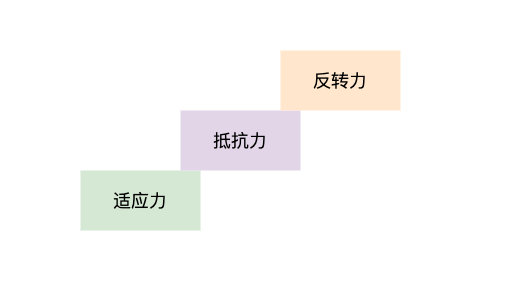
A commercial company emphasizes profit, and profit = revenue - cost. To earn more profit there are only two paths: increase revenue or reduce cost. This is where the opportunity for ToB comes from.
Two examples. For manufacturing, a supply chain is indispensable. If a piece of software could manage the entire process — covering orders, production, and logistics end to end — it would greatly speed up turnover efficiency and raise revenue. Another example is outsourcing services. By stripping out non-core business to professional service providers, a commercial company can lower cost and risk and keep the size of the organization under control.
Another question worth thinking about: why you, and not someone else? Bidding is unavoidable in ToB — shop around and the one with the best price and quality wins. Setting aside some cases of opaque dealing by force majeure, a ToB service also needs to think from the buyer’s position: why is my product worth paying this much for? The question is considered below from two angles.
2. Bottom-Up
Bottom-up is usually a strategy adopted by large companies. They use their own business to incubate and polish a product, and then abstract it into a general-purpose solution.
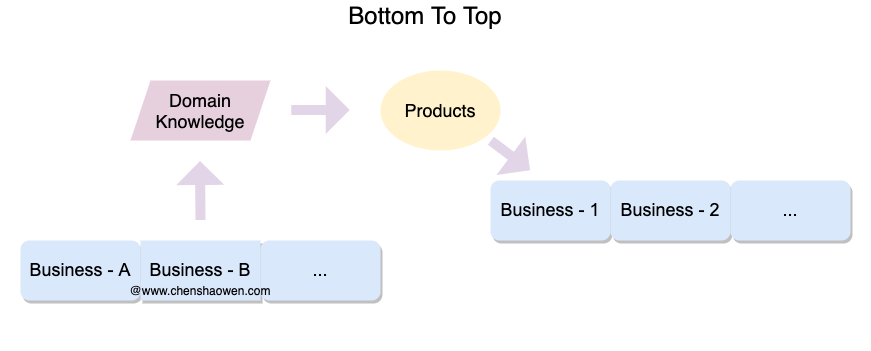
A large company’s own scale gives the product an endorsement and lets it build competitiveness in the market.
But ToB is a low-growth business that demands continuous investment, and not every ToC company is willing to take part in it. Usually only when its own business growth is limited does it consider switching tracks or industries.
3. Top-Down
Top-down is usually a strategy adopted by small companies. They turn their own understanding of a domain into a product.
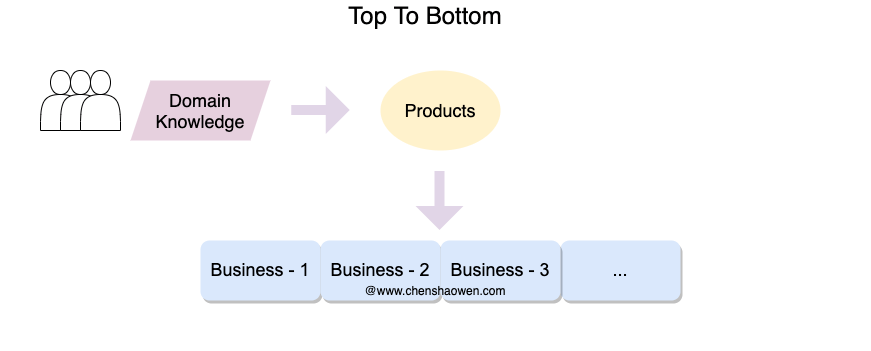
Anyone who can join a small company as a founder must have special resources or something of real weight. A small company struggles to provide an endorsement for its product, so it relies mainly on the authority of a few people and on customer relationships. Customer relationships are the key to the existence of some small companies, and are also a stroke of luck that can be encountered but not sought — the discussion below focuses on the other factor.
What a small company needs is someone who keeps cultivating a segmented industry and has a deep and comprehensive understanding of the domain. In today’s restless business environment, such people are rare and precious. A small company is willing to take on some risk and give them the chance to create and stand on their own — something a large company cannot offer. The veteran expert and the small company each get what they need: one realizes their own will, the other gains a business opportunity.
This is in fact an ideal state, because sometimes a small company simply cannot attract a veteran expert at all. But to build that authority, it has no choice but to borrow momentum through some special means. In software, open source is held up very high. Open-source software can in turn borrow momentum from upstream open-source software.
If authority cannot be built and customers cannot be persuaded, then the only option is attentive service. This non-standardized way of serving is often led around by the customer and cannot be scaled up widely, heading down the path of customization.
