1. Production Cases
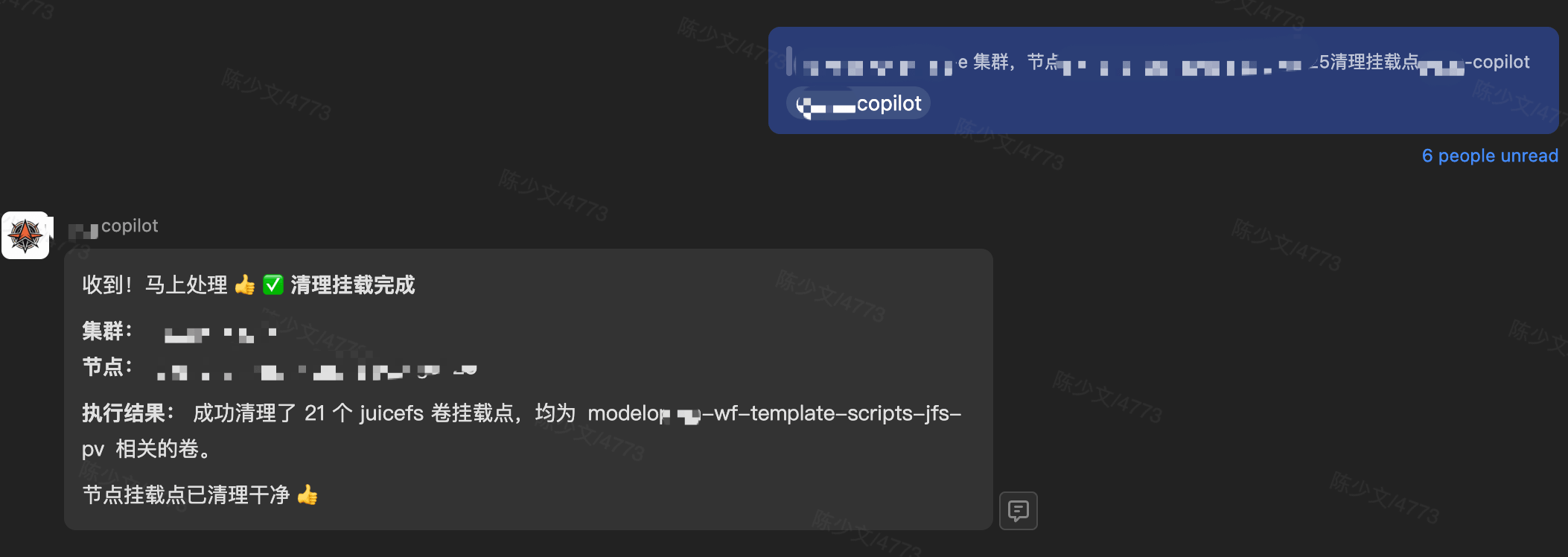
- Cleaning up a node
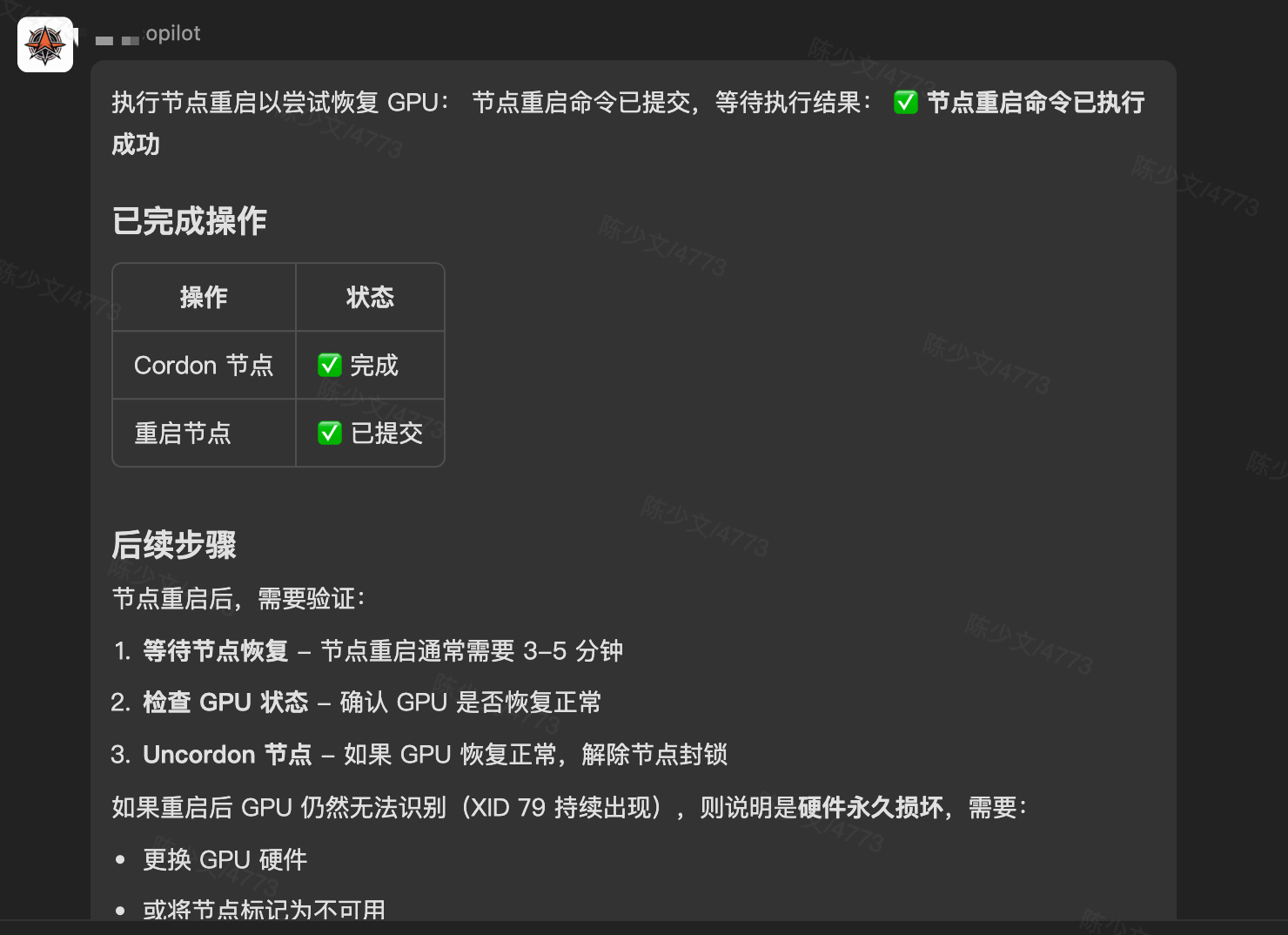
- Restarting a node
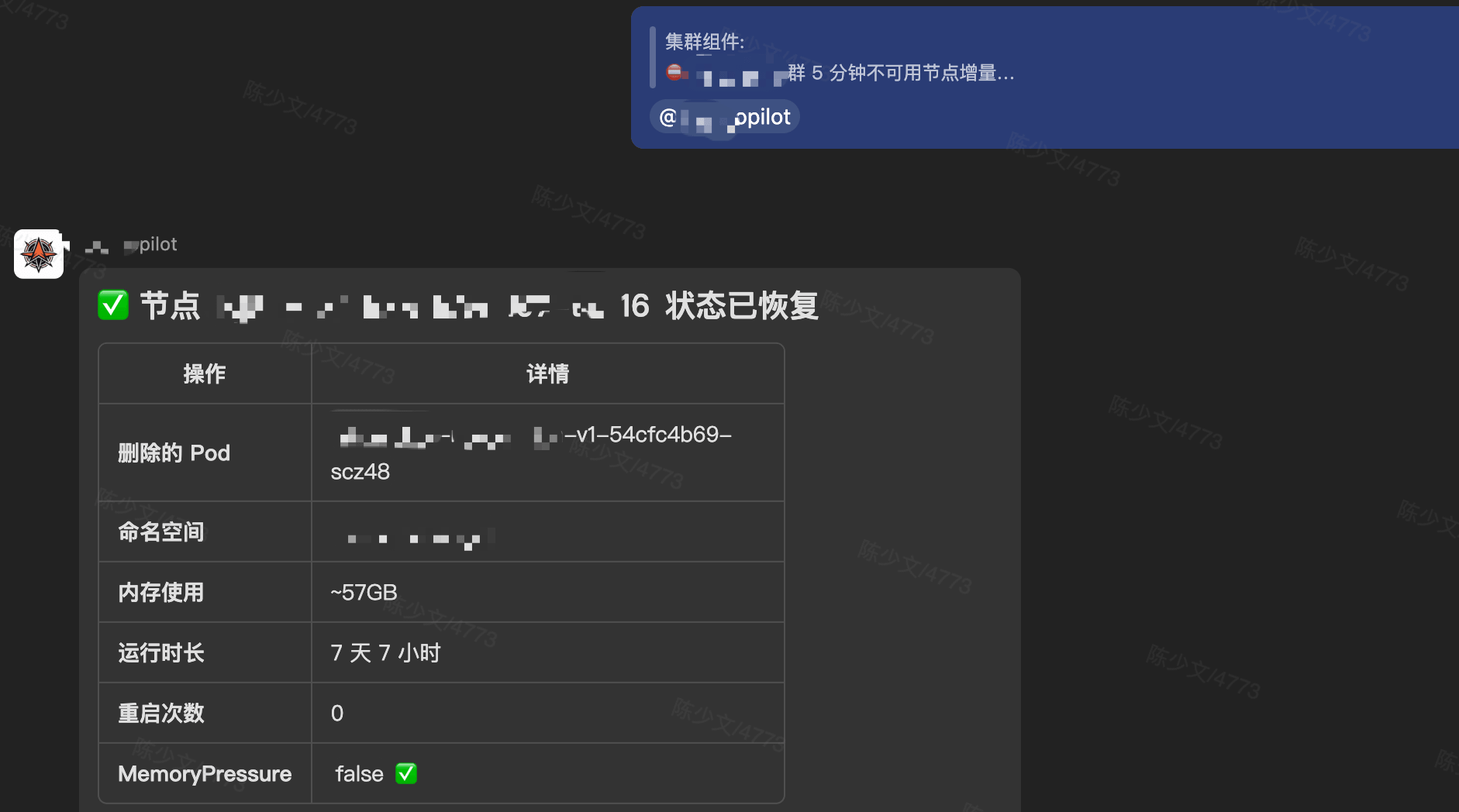
- Deleting an abnormal Pod
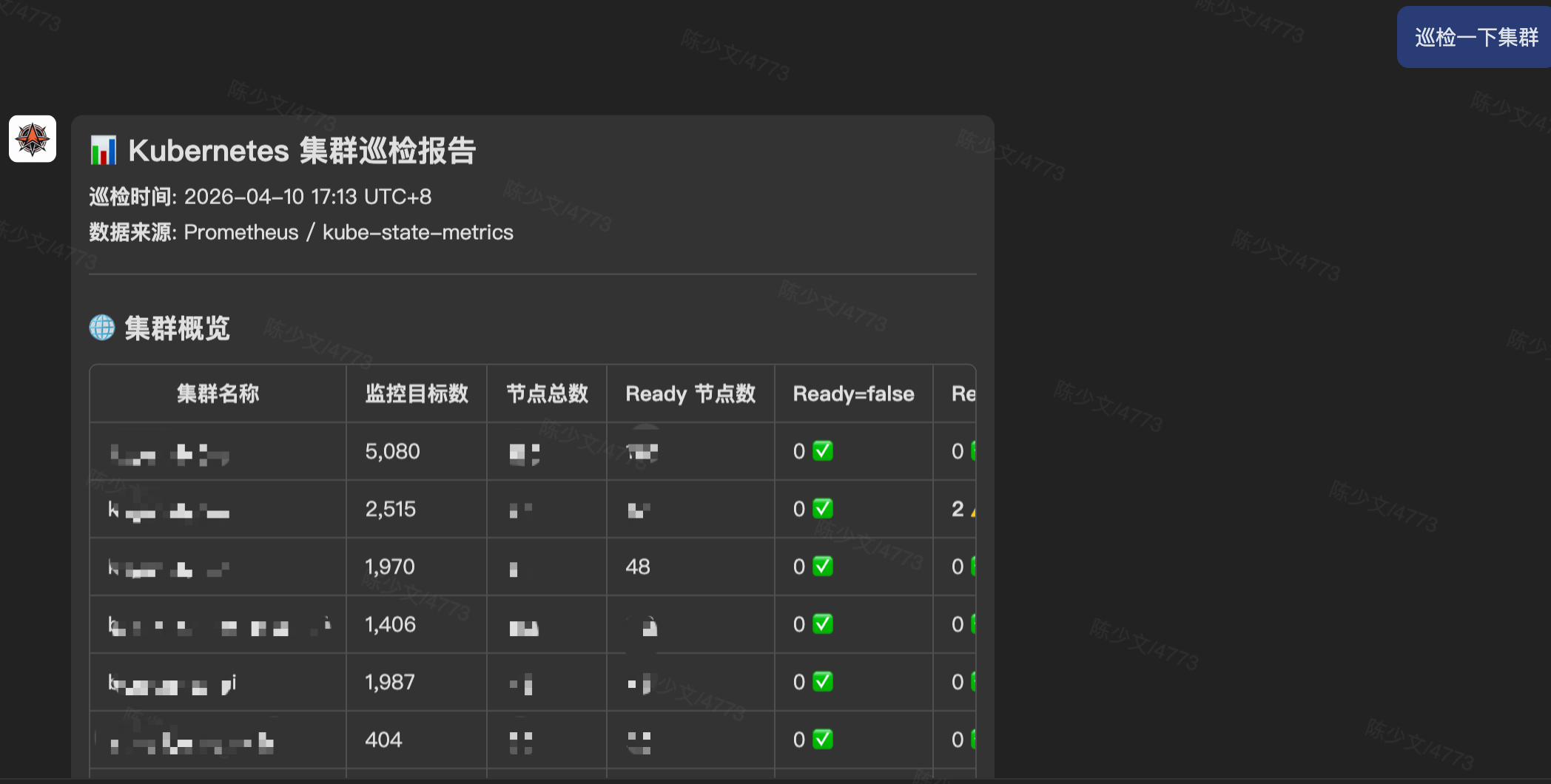
- Inspecting the cluster
2. Two Steps to Get Configured
Step one: configure MCP.
Hand this configuration to OpenClaw and it will set it up for you.
| |
Step two: install skills.
Tell OpenClaw to install a skill for ops-mcp-server.
| |
Now you can start raising an operations OpenClaw of your own, tailored to your needs.
3. How to Integrate with OpenClaw
OpenClaw not only needs limbs so it can execute concrete tasks; it also needs eyes so it can observe how the system is running.
Executing tasks depends mainly on SOPs. With these standard operating procedures in place, we can confidently hand the execution step over to OpenClaw. See the earlier article You Can Land an AI Agent This Way - The SOPS Edition.
Operations observability is not only metrics, logs, and traces — it also includes events. See the earlier article You Can Land an AI Agent This Way - The Operations Events Edition. Events are a better observability dimension: an event comes with a change, and change is the greatest enemy of stability and the dimension that most deserves our attention.
We export all of these capabilities to OpenClaw through ops-mcp-server. In fact, it is not only OpenClaw that consumes them — some of the Vibe coding projects we build are also based on ops-mcp-server. If you do not have a ready-made capability-layer gateway in-house, using an MCP server to expose a unified access entry point is a very good choice.
4. OpenClaw’s Operations Flywheel
OpenClaw is a system with the ability to evolve itself. Why does it feel like OpenClaw gets smarter the more you use it, and understands you better and better? Because OpenClaw keeps cycling through trying to handle something, receiving feedback, and optimizing its approach. After a few rounds, OpenClaw easily reaches a good score.
OpenClaw needs a flywheel. OpenClaw needs to know the state of the thing it operates, needs to be able to check the system’s state, needs to be able to modify the system’s state, and needs to confirm the state of the thing it operates once more. These are exactly the capabilities we need to provide to OpenClaw — they can be an interface, a script, a CLI, or anything else.
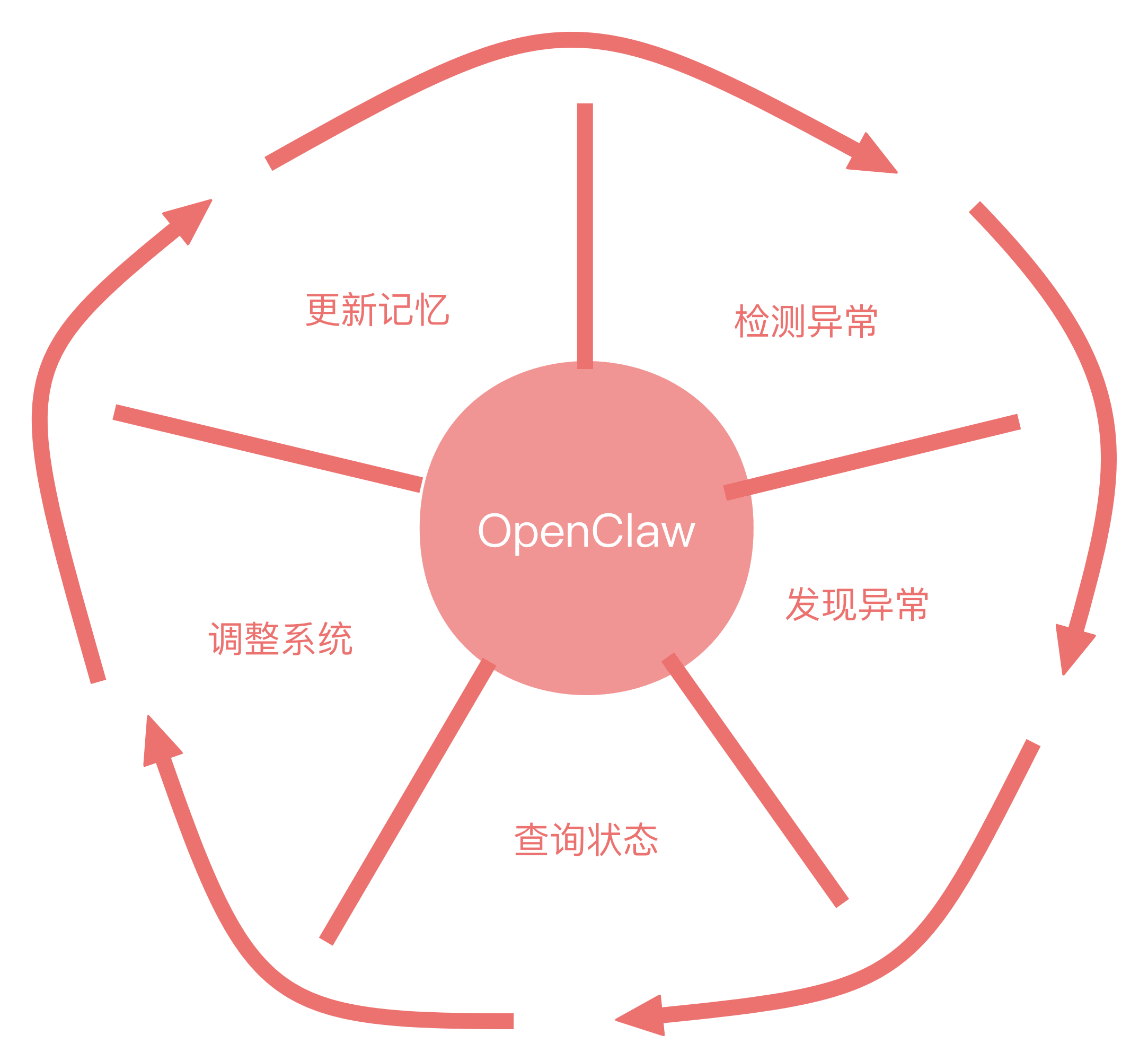
As shown in the diagram above, if we can provide these complete capabilities to OpenClaw, then OpenClaw will use the flywheel to bring us infinite possibilities.
