Author: Yu Yang
Subtitle: The Experience of a Chinese Trader
Publication Year: 2011-3-2
ISBN: 9787300132440
Notes:
    ROE
    = 净利润/股东权益(Net Profit / Equity)

    =(净利润/销售收入)*(销售收入/总资产)*(总资产/股东权益)
      (Net Profit / Sales) * (Sales / Assets) * (Assets / Equity)

    = 销售利润率 * 资产周转率 * 财务杠杆比率
      (Profit Margin) * (Asset Turnover) * (Financial Leverage)
To improve ROE, there are three models to choose from. The first is the Microsoft model: raise the profit margin. The second is the Walmart model: raise asset turnover. The third is the Wall Street model: raise financial leverage. An ordinary company can usually manage only one of the first two; later it needs to bring in finance-related executives to use the third approach — adding leverage to improve ROE.
In the pre-crisis era of abundant liquidity, vast amounts of capital flowed from countries such as Japan — with low interest rates and low investment returns — to countries with higher interest rates and abundant investment opportunities; reflected in exchange rates, this meant the currencies of Japan and similar countries kept depreciating. The United States, by contrast, acted like a giant hedge fund: on one hand it attracted overseas investment into lower-interest US bonds, and on the other it exported capital in large volumes for higher-return equity investments.
During the financial tsunami, the multinational banking groups and hedge funds that had been the key behind-the-scenes drivers of global capital flows took heavy losses. They pulled back and withdrew their overseas investments, which caused the currencies of capital-exporting countries such as Japan and the United States to appreciate and the currencies of capital-importing countries to depreciate.
China places more emphasis on macro-control and leans toward Keynesianism. Keynes held that a private economy self-regulates poorly and inevitably produces boom-and-bust cycles, and he advocated counter-cyclical operations through a government-led public economy. When the economy overheats, the government should raise interest rates and taxes and cut public spending to prevent excess demand; when the economy is in recession, it should increase public spending to make up for insufficient demand in the private economy.
The eurozone has no central government and lacks a unified fiscal policy, but it can conduct monetary policy through the European Central Bank, so monetarism prevails in the euro area. The monetarist school holds that expansionary fiscal and monetary policy, in the long run, only causes inflation and does nothing for economic development, and that the government should abandon intervention in the economy and simply control the money supply and keep prices stable.
The United States is the stronghold of the supply-side school, which advocates lower taxes and less government intervention.
Before the crisis, well-capitalized professional players competed against one another using mathematical models, relative value, and leverage; in the post-crisis era, the market’s function returned to its origin: acting as an intermediary between financiers and investors, a channel for the flow of capital.
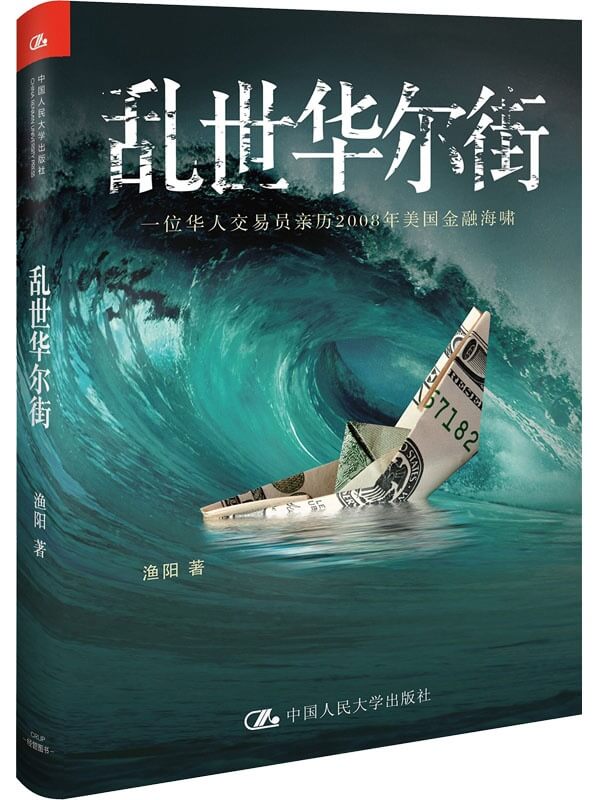
This is a book written by a trader, describing in detail how a Peking University student became a trader at Luxi Bank in charge of proprietary bond trading. A trader needs not only a solid mathematical foundation and financial knowledge, but even more a sensitivity to the market and a familiarity with human nature. Bonds are a crucial link in the financial system: government institutions can control market liquidity through operations in bonds, enterprises can raise funds through bonds, and pension and social security fund accounts particularly favor a bond market with low risk and large capacity. A huge market and good liquidity give bonds a special status; leverage can improve yields, and the returns need not be worse than equities — indeed they come with a higher Sharpe ratio. The entire financial system depends on high-probability events; if a black swan occurs, risk is easily punctured and spreads, and at that moment the existing system can collapse in an instant. The old models only help fuel a stampede.
