Subtitle: The Working Method Behind the Explosive Growth of Google and Amazon
Author: John Doerr (US)
Publisher: CITIC Press
Publication Year: 2018-12
ISBN: 9787508696881
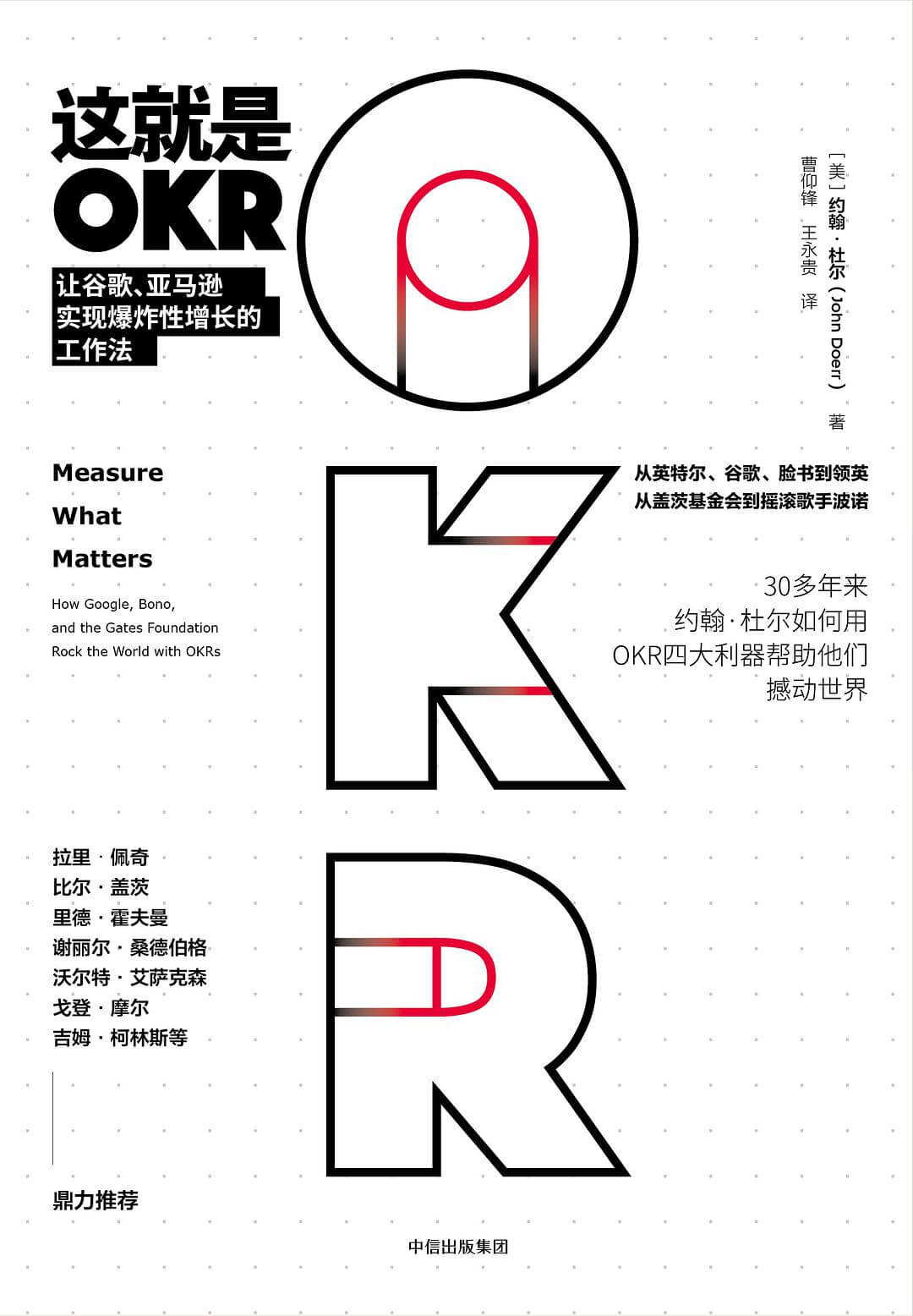
Notes:
OKR stands for Objectives and Key Results, a working method for managing goals and their completion invented by Intel founder Andy Grove. The O stands for Objective, which should be important and specific, action-oriented, and inspiring — for example, improving the stability of a system. The O should stay aligned with the team’s mission. KR stands for Key Results, which should be clear, have a completion deadline, be challenging, measurable, and verifiable after the fact — for example, establishing an SLA metrics system and reaching three nines. Techniques for listing KRs: metric-based (for example, driving 20 business units to onboard the system) and milestone-based (for example, completing development of the system and putting it online to provide service).
OKR is strongly directional, values the process, motivates employees, and breaks through the ceiling on goals; it is bottom-up correction combined with top-down guidance. KPI emphasizes results, is a top-down assignment of tasks, is a constraint on employees, and involves a bargaining game between superiors and subordinates.
The benefits of OKR are focusing on the most important goals, promoting team collaboration, tracking responsibility, and challenging the impossible.
The techniques for setting OKRs are bottom-up, a willingness to fail, and patience and determination. First let employees proactively list the items they are willing to do, then classify, merge, and prioritize those items, and finally summarize and distill them into OKRs.
OKRs should be public, and in operation they work with the CFR mechanism, advanced through conversation, feedback, and recognition, and the completion status of OKRs needs to be reviewed regularly.
OKR scoring: 0.7-1.0 is a green light, complete; 0.3-0.7 is a yellow light, some progress made; 0-0.3 is a red light, no key results achieved. A score that is too high means the goal was too low and lacked challenge; a goal that is too low means the goal probably should be dropped.
