Author: Wang Wei
Publisher: CITIC Press
Publication Year: 2017-10-15
ISBN: 9787508667751
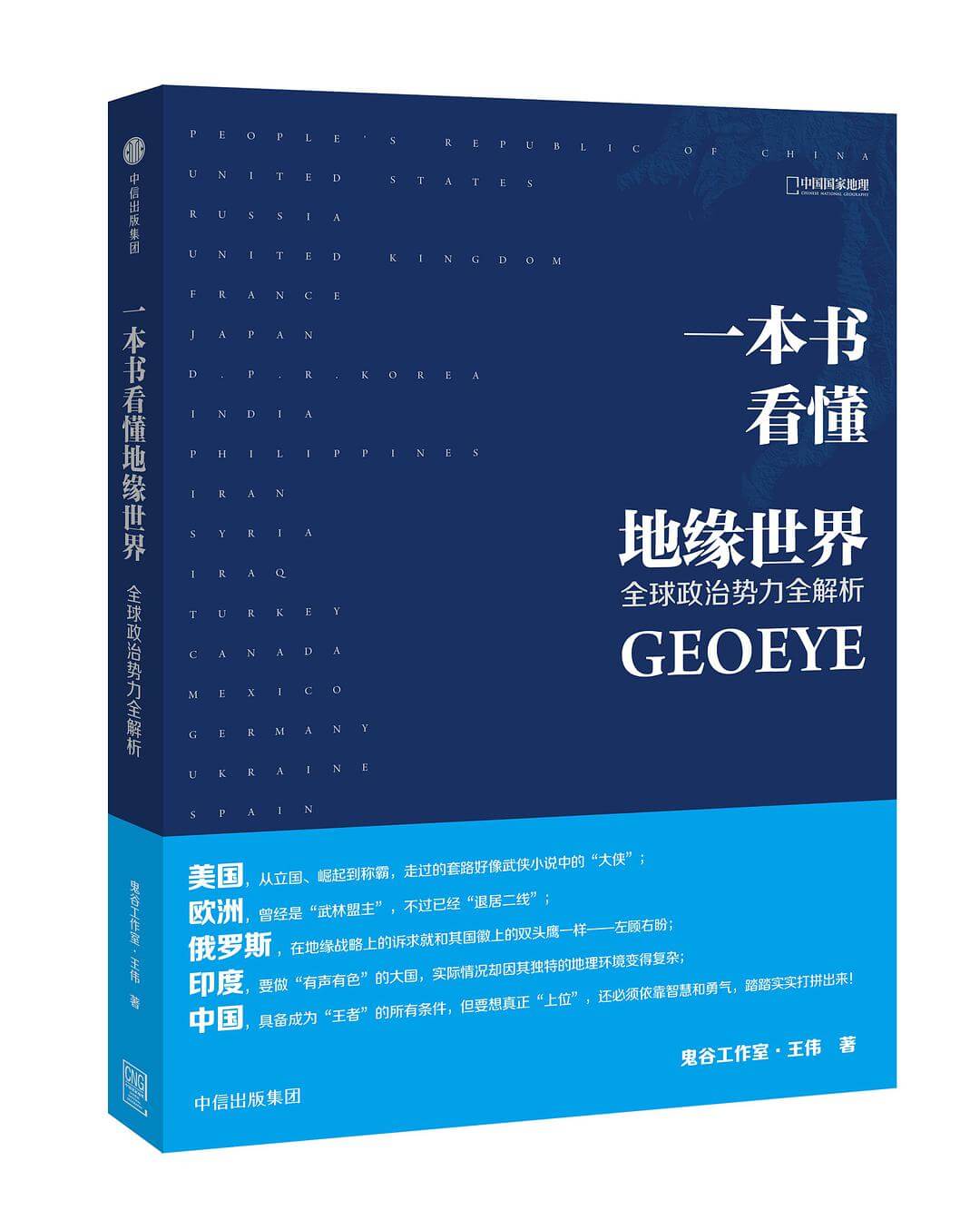
Notes:
Within ten thousand years, geography is an unchangeable fact and a field that strategists continue to study in depth. To China’s east, past Japan and across the North Pacific, lies the United States; to China’s southwest, through the Indian Ocean and the Atlantic, China is also connected to the United States.
The United States relies on its domestic industrial and technological capabilities. By controlling sea power and building military bases in various places, it achieves global deterrence and safeguards its own interests.
Europe is like the Warring States period: only Germany and France can really fight.
Russia is vast and sparsely populated and rich in resources, but it lacks access to the sea and cannot control the global flow of goods, so it can only pin its hopes on the Crimean Peninsula on the northern shore of the Black Sea. Facing Eurasia with no natural defenses to hold, it can only attack to defend, which has given it the image of a “warrior nation.”
India enjoys the advantages of the Indian Ocean, but the central government has weak control over the regions, governance is chaotic, and it has been deeply poisoned by its colonizers. At the same time, when the British withdrew, the borders drawn with other countries left behind a great many disputes, leaving India no attention to spare for anything else.
As for China, the United States props up Japan and South Korea to control Asia’s maritime gateways. Island nations have no depth, no natural defenses, and insufficient logistics, so they can only attach themselves to great powers. Because its sea power is confined by the island chains, China can only continue to develop its land power, and this is where the Belt and Road comes from — opening up China’s economic route to Europe and Africa. Within China’s interior, the east is clearly more economically developed than the west, yet the route to Europe and Africa must pass through the west, so vigorously developing the west is necessary; at the same time it can narrow the wealth gap and promote ethnic unity.
